Human Brain Cells Made in the Lab that Grow in the Mouse Brain


The laboratory of Arnold Kriegstein, who serves as the director of the Broad Center of Regenerative Medicine and Stem Cell Research at UC San Francisco has made a vitally important type of brain cell from human pluripotent stem cells that smoothly integrates into the brains of laboratory animals. Such a discovery could potentially provide cells that could treat epileptics, Parkinson’s disease or even Alzheimer’s disease.

Medial ganglionic eminence (MGE) cells are a unique type of progenitor cell in the developing brain that guides cell and axon migration. The MGE is located between the thalamus and the caudate nucleus in the developing brain and it facilitates tangential cell migration during embryonic development in the brain.

In the developing brain, cells move radially, along special glial cells that act as tracts for the migrating cells, or tangentially between the radial glial cells. Those cells that move tangentially (perpendicular to the radial glial cells) are specially designated to form GABAminergic neurons; that is neurons that use gamma-amino-butyric acid as their neurotransmitter. However, the MGE also contributes cells to the basal ganglia, which helps control voluntary movement, and guides those axons that grow from the thalamus into the cerebral cortex, or, conversely, those axons that grow from the cerebral cortex to the thalamus. The MGE is a transient structure, and after one year of age, the MGE disappears.

medial ganglionic eminence

Making MGE cells from pluripotent stem cells has been one of the holy grails of developmental neurobiology. Now Kirgstein’s laboratory has succeeded in doing just that.   By subjecting human embryonic stem cells and induced pluripotent stem cells to a complex and extensive differentiation procedure, Kirgstein and his coworkers succeeded in producing large quantities of MGE progenitors that readily matured into forebrain interneurons.  They treated pluripotent stem cells with several growth factors, but more importantly, they timed the delivery of these factors to shape their developmental path.  By conducting neurophysiological experiments on the cells as they differentiated them, Kirgstein and coworkers discovered that they could effectively determine if they had properly derived GABAminergic interneurons.  Jiadong Chen in Kirgsteins’s laboratory showed that the MGE-like progenitors formed proper synapses or connections with other neurons and responded appropriately when stimulated.  Also, as the interneurons matured into more adult-like interneurons, their neurophysiology became more adult-like.  

When grown in the laboratory in culture or when injected into the brains of mice, these MGE-like cells developed into GABAergic interneuron subtypes that displayed the properties of mature GABAminergic neurons.  Also, the cells kept these properties for up to 7 months, and therefore, faithfully mimicked endogenous human neural development.

When injected into mouse brains, the MGE-like progenitors integrated into the brain and formed connections with existing cells.  According to Kirgstein, this property of these cells and their behavior in living tissue makes them prime candidates to test interneuron malfunction that is characteristic of human diseases.  They might also provide material to treat patients who suffer from neurological diseases that affect interneuron function.

According to Kirgstein, “We think that this one type of cell may be useful in treating several types of neurodevelopmental and neurodegenerative disorders in a targeted way.”

In earlier work, Kirgstein implanted mouse MGE cells into the spinal cord of mice that suffered from neuropathic pain.  The implanted cells reduced the pain of those mice, suggesting that they can be used to treat other neurological conditions such a spasticity, Parkinson’s disease and epilepsy.

The first author of this paper, Cory Nicholas said, “The hope is that we can deliver these cells to various places within the nervous system that have been overactive and that they will functionally integrate and provide regulated inhibition.”

Baby from Ohio Saved With An Airway Splint Made by A 3-D Printer


A baby boy from Ohio, Kaiba (KEYE’-buh) Gionfriddo, was born with a trachea (windpipe) that was fragile and kept collapsing. Without precious oxygen, he choked and passed out. Even though the physicians attending him thought about using an airway splint to open his airway, they had yet to implant it. Kaiba was not getting any better, and without a way to get him the oxygen that his little body desperately needed, he did not have much time. All he could do was lie in a hospital bed on a breathing machine.

Kaiba Gionfriddo

To solve this problem, the doctors used plastic particles and a 3-D laser printer to generate an airway splint to deliver oxygen to his lungs. This is a technological first and is the latest advance in the quickly advancing field of regenerative medicine that tries to make human body parts in the lab.

The even more stupendous aspect of this feat is that the production of the tracheal tube only too k one day. Yes, in a single day they “printed out” 100 tiny tubes by employing computer-guided lasers to stack and fuse thin layers of plastic to form various shapes and sizes. The next day, with special permission from the US Food and Drug Administration, they implanted one of these tubes in Kaiba. Needless to say, this is the first time such a treatment has even been done.

Suddenly, Kaiba, whom doctors said would probably never leave the hospital alive, could breathe normally for the first time. Kaiba was 3 months old when the operation was done last year and is nearly 19 months old now. He is about to have his tracheotomy tube removed since it was placed in his throat when he was a couple of months old. He no longer needs a breathing machine and has had not had a single breathing crisis since coming home a year ago.

“He’s a pretty healthy kid right now,” says Dr. Glenn Green, a pediatric ear, nose and throat specialist at C.S. Mott Children’s Hospital of the University of Michigan in Ann Arbor, where the operation was done. This remarkable feat of tissue engineering is described in the New England Journal of Medicine.

Independent experts have highly praised this and the potential 3-D printing provides for creating and quickly manufacturing body parts to solve unmet medical needs.

“It’s the wave of the future,” says Dr. Robert Weatherly, a pediatric specialist at the University of Missouri in Kansas City. “I’m impressed by what they were able to accomplish.”

So far, only a few adults have had trachea, or windpipe transplants, and these are usually used to replace windpipes destroyed by cancer. The windpipes came from dead donors or were lab-made, sometimes using stem cells. Last month, a 2-year-old girl born without a windpipe received one grown from her own stem cells on a plastic scaffold at a hospital in Peoria, Ill.

Kaiba, however, had a different problem; namely an incompletely formed bronchus. The bronchi are the tubes that branch from the windpipe to the lungs. Approximately 2,000 babies are born with such defects each year in the United States and most outgrow them by age 2 or 3, as they grow and mature and their respiratory tract replaces the lost tissues.

In severe cases, parents learn of the defect when the child suddenly stops breathing and dies. That almost happened when Kaiba was 6 weeks old at a restaurant with his parents, April and Bryan Gionfriddo, who live in Youngstown, in northeast Ohio. “He turned blue and stopped breathing on us,” and his father did CPR to revive him, April Gionfriddo says.

More episodes followed, and Kaiba had to go on a breathing machine when he was 2 months old. Doctors told the couple his condition was grave. “Quite a few of them says he had a good chance of not leaving the hospital alive. It was pretty scary,” his mother says. “We pretty much prayed every night, hoping that he would pull through.”

Fortunately a physician at Akron Children’s Hospital named Dr. Marc Nelson suggested the experimental work in Michigan in which researchers were testing airway splints made from biodegradable polyester that are sometimes used to repair bone and cartilage.

Kaiba had the operation on Feb. 9, 2012. The splint was placed around his defective bronchus, which was stitched to the splint to keep it from collapsing. The splint has a slit along its length so it can expand and grow as the child does — something a permanent, artificial implant could not do.

The plastic from which the splint is made is designed to degrade and gradually be absorbed by the body over three years, as healthy tissue forms to replace it, according to the biomedical engineer who led the work, Scott Hollister.

Green and Scott Hollister have a patent pending on the device and Hollister has a financial interest in a company that makes scaffolds for implants.

Dr. John Bent, a pediatric specialist at New York’s Albert Einstein College of Medicine, says only time will tell if this proves to be a permanent solution, but he praised the researchers for persevering to develop it.

“I can think of a handful of children I have seen in the last two decades who suffered greatly … that likely would have benefited from this technology,” Bent says.

Bioengineered Trachea Implanted into a Child


Hannah Genevieve Warren was born in 2010 in Seoul, South Korea with tracheal agenesis, which is to say that she was born without a trachea. Hannah had a tube inserted through her esophagus to her lungs that allowed her to breathe. Children with tracheal agenesis usually die in early childhood, 100% of the time. No child with this condition has ever lived past six years of life. Hannah spent the first two years of her life at the Seoul National Hospital before she was transported to Illinois for an unusual surgery.

While at the Children’s Hospital of Illinois, on April 9, 2013, Hannah had a bioengineered trachea transplanted into her body. This trachea was the result of a remarkable feat of technology called the InBreath tracheal scaffold and bioreactor system that was designed and manufactured by Harvard Bioscience, Inc. Harvard Bioscience, or HBIO, is a global developer, manufacturer and marketer of a broad range of specialized products, primarily apparatus and scientific instruments, used to advance life science research and regenerative medicine.

InBreath tracheal scaffold

InBreath tracheal scaffold

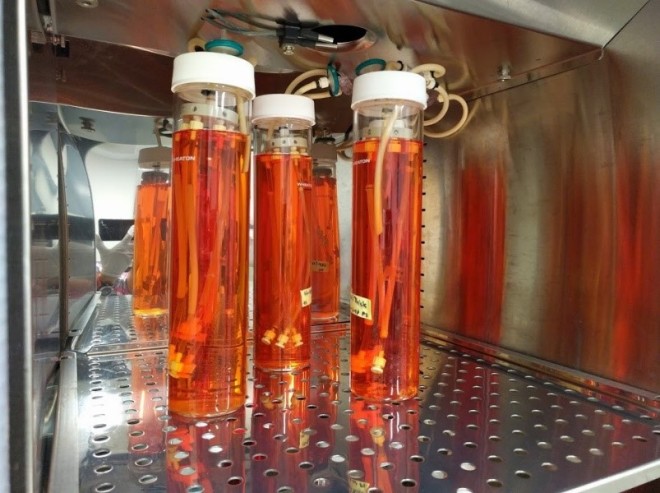
Hannah’s tracheal transplant was the first regenerated trachea transplant surgery that used a biomaterial scaffold that manufactured by the Harvard Apparatus Regenerative Technology (HART) Inc., a wholly owned subsidiary of Harvard Bioscience. HART ensured that the scaffold and bioreactor were custom-made to Hannah’s dimensions. Then the scaffold was seeded with bone marrow cells taken from Hannah’s bone marrow, and the cells were incubated in the bioreactor for two days prior to implantation. Because Hannah’s own cells were used, her body accepted the transplant without the need for immunosuppressive (anti-rejection) drugs.

InBreath Bioreactor

InBreath Bioreactor

The surgeons who participated in this landmark transplant were led by Dr. Paolo Macchiarini of Karolinska University Hospital and Karolinska Institutet in Huddinge, Stockholm and Drs. Mark J. Holterman and Richard Pearl both of Children’s Hospital of Illinois. This surgery was approved by the FDA under an Investigational New Drug (IND) application submitted by Dr. Holterman.

Dr. Mark Holterman, Professor of Surgery and Pediatrics at University of Illinois College of Medicine at Peoria, commented: “The success of this pediatric tracheal implantation would have been impossible without the Harvard Bioscience contribution. Their team of engineers applied their talent and experience to solve the difficult technical challenge of applying regenerative medicine principles in a small child.”

David Green, President of Harvard Bioscience, said: “We would like to congratulate Dr. Macchiarini, Dr. Holterman, Dr. Pearl and their colleagues for accomplishing the world’s first transplant of a regenerated trachea in a child using a synthetic scaffold and giving Hannah a chance at a normal life. We also wish Hannah a full recovery and extend our best wishes to her family.”

Hannah’s surgery is the seventh successful implant of a regenerated trachea in a human using HART technology. Prior successes included the first ever successful regenerated trachea transplant in 2008, the first successful regenerated trachea transplant using a synthetic scaffold in 2011, and the commencement of the first clinical trial of regenerated tracheas in 2012. HART has plans to commence discussions with the FDA and EU regulatory authorities in the near future regarding the clinical pathway necessary to bring this new therapeutic approach to a wider range of patients who are in need of a trachea transplant.

Stem Cell Treatments for Large Ankle Cartilage Lesions


The Regenexx blog has called attention to to a study that shows that older patients with ankle problems can benefit from mesenchymal stem cell treatments of the ankle.

The paper referenced by Centeno on his blog was published in the American Journal of Sports Medicine 2013 May;41(5):1090-9, and is entitled, “Clinical outcomes of mesenchymal stem cell injection with arthroscopic treatment in older patients with osteochondral lesions of the talus.” The authors of this paper are Kim YS, Park EH, Kim YC, Koh YG. who all hale from the Department of Orthopedic Surgery, Yonsei Sarang Hospital, Seoul, South Korea.

The paper notes that there are no generally accepted, ideal treatments for “osteochondral lesions of the talus”, which is in plain English means cartilage erosions of the large bone in the foot that articulates with the base of the lower leg bones. That bone, the talus, sits above the heel bone (calcaneus) and is covered with articular cartilage to absorb shocks that occur between blows from the fibula and tibia and the talus. Over time, wear and tear can erode this cartilage and the best way to go about fixing these osteochondral lesions of the talus or OLTs as they are called, is not at all clear. Centeno mentions in his blog that he and his colleagues have been treating OLTs with mesenchymal stem cells for some time (since 2006). In this paper, Kim and others tested the ability of bone marrow mesenchymal stem cells (MSCs) to provide relief from OLT.

ankle_anatomy_bones01

Kim and colleagues compared the outcomes of patients who had received MSC injections and arthroscopic marrow stimulation treatments against the outcomes of those patients who had received only arthroscopic marrow stimulation treatment alone.

In this study, from a starting group of 107 patients with OLTs that were treated arthroscopically, only those patients older than 50 years (65 patients) were included in this study. Kim and others divided the patients into 2 groups: 35 patients (37 ankles) were treated with arthroscopic marrow stimulation treatment alone (group A) and 30 patients (31 ankles) who underwent MSC injection along with arthroscopic marrow stimulation treatment (group B).

The clinical outcomes for these patients were assessed according to the visual analog scale (VAS) for pain, but there were other measurements as well. For example, how active were the patients? A Tegner score determined how active patients were, which is important because the more active a patient is, the less likely they are to be in pain. Other assessments included the American Orthopaedic Foot and Ankle Society (AOFAS) Ankle-Hindfoot Scale, which measures how well you walk and how much pain you experience when you do it, and other scores for the foot and how well it works

The outcomes for the study were as follows. Both groups showed a decrease in pain. Group A had a VAS score that started at 7.2 ± 1.1 and fell to 4.0 ± 0.7, whereas group B started at 7.1 ± 1.0 and decreased to 3.2 ± 0.9. Therefore the patients in group B showed a slightly greater decrease in pain over the non-MSC group.

As for the AOFAS score in each group, which measures ankle function and pain while using the ankle, again, both groups showed improvement. Patients in group A went from 68.0 ± 5.5 to 77.2 ± 4.8, and patients in group B went from 68.1 ± 5.6 to 82.6 ± 6.4. Thus the patients who received the MSC treatments used their ankles better than those patient who did not receive MSC treatments, and they also used their ankles with less pain.

A different measure of ankle function, the Roles and Maudsley score, also increased significantly in group A patients as opposed to group A patients at postsurgical follow up (1-4 years after the surgery). However, the real “money” finding of this research was that the patients who had received the MSC injections were significantly more active after surgery than the non-MSC patients. The activity score in patients from group A. Group A patients had a Tegner activity score that went from 3.5 ± 0.8 to 3.6 ± 0.6. That is not a significant increase. However the patients in group B, who had received the injections of their own MSCs into the ankle, had Tegner activity scores that improved from 3.5 ± 0.7 to 3.8 ± 0.7 (P = .041). Thus the patients who had received the MSC injections had less pain, better ankle function with less pain, better ankle and foot function 1-4 years after surgery, and were significantly more active after surgery.

From these data, the authors concluded that injection of MSCs with marrow stimulation treatment was a treatment option in patients older than 50 years than marrow stimulation treatment alone. THis was especially the case if the OTL was larger than 109 square millimeters. Also, those patients in group A who had subchondral cysts did not fare well with their treatment, but there was no such correlation between a poor clinical outcome and the presence of a subchondral cyst in patients from group B.

subchondral cyst in the ankle

subchondral cyst in the ankle

Therefore, even though MSC treatments for OTLs is still in its early stages of development, they seem to have the potential to treat of OLTs in patients older than 50 years. However, this study, while not tiny, is still not all that large, and larger studies are warranted.

A Model System for A Devastating Childhood Disease


A Japanese research team from Fukuoka, Japan, specifically from the Department of Pediatrics at the University of Fukuoka, Japan, have used induced pluripotent stem cell technology to make neurons from human patients who suffer from a rare, devastating condition known as Dravet syndrome as a model system.

Dravet syndrome (DS) causes difficult to control seizures within the first year or two of life and later causes cognitive deficits and autistic traits. Dravet’s syndrome is caused by genetic alterations in the SCN1A gene, which encodes the α-subunit of the voltage-gated sodium channel.

DS is very rare – 1/30,000 children, but the mutation is typically not inherited from either parent, but occurs spontaneously in the baby’s cells during development. The best model systems to date are genetically engineered mice, but the differences between human and mouse brains limits the usefulness of this model system.

To make a better model system, workers from the laboratory of Shinichi Hirose took skin biopsy samples from a DS patient, and converted those skin cells into induced pluripotent stem cells (iPSCs), which were then differentiated into neurons. In particular, the neurons that malfunction in DS patients are GABAminergic neurons, and by differentiating DS iPSCs into GABAminergic neurons, Hirose’s laboratory made a model system for DS patients that could be grown in a laboratory culture dish.

Hirose explained their results this way: “From research in mice we believed that SCN1A mutations affect GABAminergic neurons in the forebrain from signaling properly. From the human neurons we also found that GABAminergic neurons were affected by DS, especially during intense stimulation. These patient-specific cell provide an unparalleled insight into the mechanism behind DS and a unique platform for drug development.”

Perhaps such experiments could eventually lead to regenerative treatments for DS patients as well.

Turning Adult Cells into Early Stage Neurons and Bypassing the Pluripotent Cell Stage


Researchers at the University of Wisconsin, Madison have converted skin cells from monkeys and humans into early neural stem cells that can form a wide variety of nervous system-specific cells. This reprogramming did not require converting adult cells into induced pluripotent stem cells or iPSCs. Su-Chun Zhang, professor of neuroscience and neurology at the University of Wisconsin, Madison, served as the senior author of this research. Bypassing the ultraflexible iPSC stage was the key advantage in this research, accord to Zhang.

Zhang added, “IPSC cells [sic] can generate any cell type , which could be a problem for cell-based therapy to repair damage due to disease in the nervous system.” In particular, the absence of iPSCs greatly reduces the risk of tumor formation in the recipient of the stem cell therapy.

There is a second advantage to this procedure. Namely that iPSC generation usually requires the recombinant viruses that deliver genes to the adult cells. These viruses, retroviruses, insert their genes directly into the genomes of the host cell. While there are ways are using such viruses, the use of retroviruses is definitely the most popular strategy for converting adult cells into iPSCs.

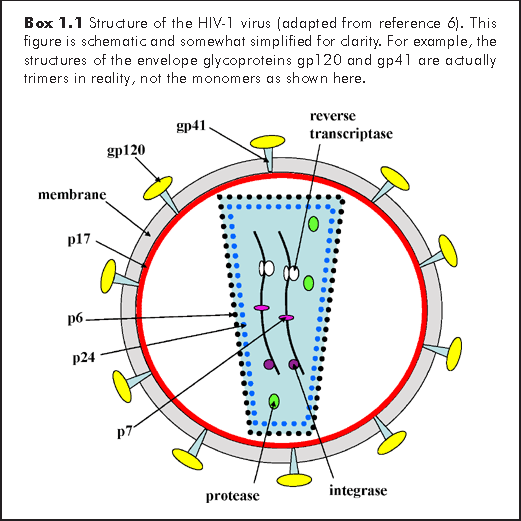
Retroviral life cycle

Retroviral life cycle

However, the procedure used in Zhang’s laboratory, utilized recombinant Sendai viruses that do not integrate their genes into the genome of the host cell, but expressed them transiently, after which, the exogenous genes are degraded.

Sendai virus

Sendai virus

Jaingfeng Lu, a postdoctoral researcher in Zhang’s lab, removed skin cells from monkeys and people, and exposed them to recombinant Sendai viruses that contained the four genes normally used to make iPSCs for 24 hours. Then Lu heated the cells to thirty-nine degrees to kill the viruses and prevent the cells from becoming iPSCs. However, 13 days later, Lu found that the cells had become induced neural progenitors or iNPs. When implanted into newborn mice, the iNPs grew normally and differentiated into neural cell types without forming any tumors.

While other researchers have managed to convert adult cells directly into neurons, Zhang admitted that he had a different goal. “our idea was to turn skin cells into neural progenitors, cells that can produce cells relating to the neural tissue. These progenitors can be propagated in large numbers.”

the research overcomes limitations of previous efforts, according to Zhang. The Sendai, which produces little more than a cold, is not a severe pathogen, does not integrate its genes into the genome of the host cell, does not cause tumors, and is considered safe, since it can be killed by heat within 24 hours. This illustrates how fevers in our bodies can kill off cold viruses. Secondly, the iNPs have a greater ability to grow in culture. Third, iNPs are far enough along in their differentiation so that they can only form nervous system-specific cell types. They cannot form muscle or live. However, the iNPs can form many more specialized cells.

Interestingly, the neurons produced from the iNPs had the characteristics of neurons normally formed in the back part of the brain, something that is potentially helpful. As Zhang noted, “For therapeutic use, it is essential to use specific types of neural progenitors. We need region-specific and function-specific neuronal types for specific neurological diseases.”

Progenitor cells grown from the skin of ALS or spinal muscular atrophy patients can be used to make a whole host of neural cells in order to model each disease and allow rapid drug screening. Such cells could also be used to treat patients with neurological disease too.

“These transplantation experiments confirmed that the reprogrammed cells indeed belong to ells of the intended brain regions and the progenitors produced the three major classes of neural cells: neurons, astrocytes, and oligodendrocytes. This proof-of-principle study highlights the possibility to generate [sic] many specialized neural progenitors for specific neurological disorders.”

Neural progenitors

Neural progenitors

Lu, Jianfeng, Liu, Huisheng, Huang, Cindy Tzu-Ling, Chen, Hong, Du, Zhongwei, Liu, Yan, Sherafat, Mohammad Amin, Zhang, Su-Chun.  Generation of Integration-free and Region-Specific Neural Progenitors from Primate Fibroblasts.  2013/05/02. Cell Reports 2211-1247. http://linkinghub.elsevier.com/retrieve/pii/S221112471300171X

Wesley Smith and Cloning


My favorite bioethicist, Wesley Smith said this about human cloning in his prescient book: A Consumer’s Guide to A Brave New World:

We can pursue biotechnology to treat disease and improve the human condition, while retaining sufficient humility and self-restraint to keep ourselves from endangering the intrinsic value of human life. Or, we can hubristically rush onto the very anti-human path warned against by Aldous Huxley, driven by our thirst for knowledge, vast profits, and obsession with control and vastly expanded life spans.

These issues are too important to be “left to the scientists.” Nor can we afford to allow the marketplace to determine what is right and what is wrong. The stakes are too high, the potential impact on each and every one of us too profound, to remain passive and indifferent to the decisions that are to be made. It is our duty to participate in the crucial cultural and democratic debates over biotechnology. The human future, quite literally, depends on it.

Prophetic and poignant – and DEAD RIGHT!!